Project name: Shkodra / Skadar Lake Connect – Transboundary Ecosystem Restoration in Albania and Montenegro
Shared waters, shared plan: restoring Shkodra / Skadar from lake shore to Adriatic.
PPNEA (Lead Partner): Zydjon Vorpsi – [email protected]
CZIP: Marija Stanišić – [email protected]
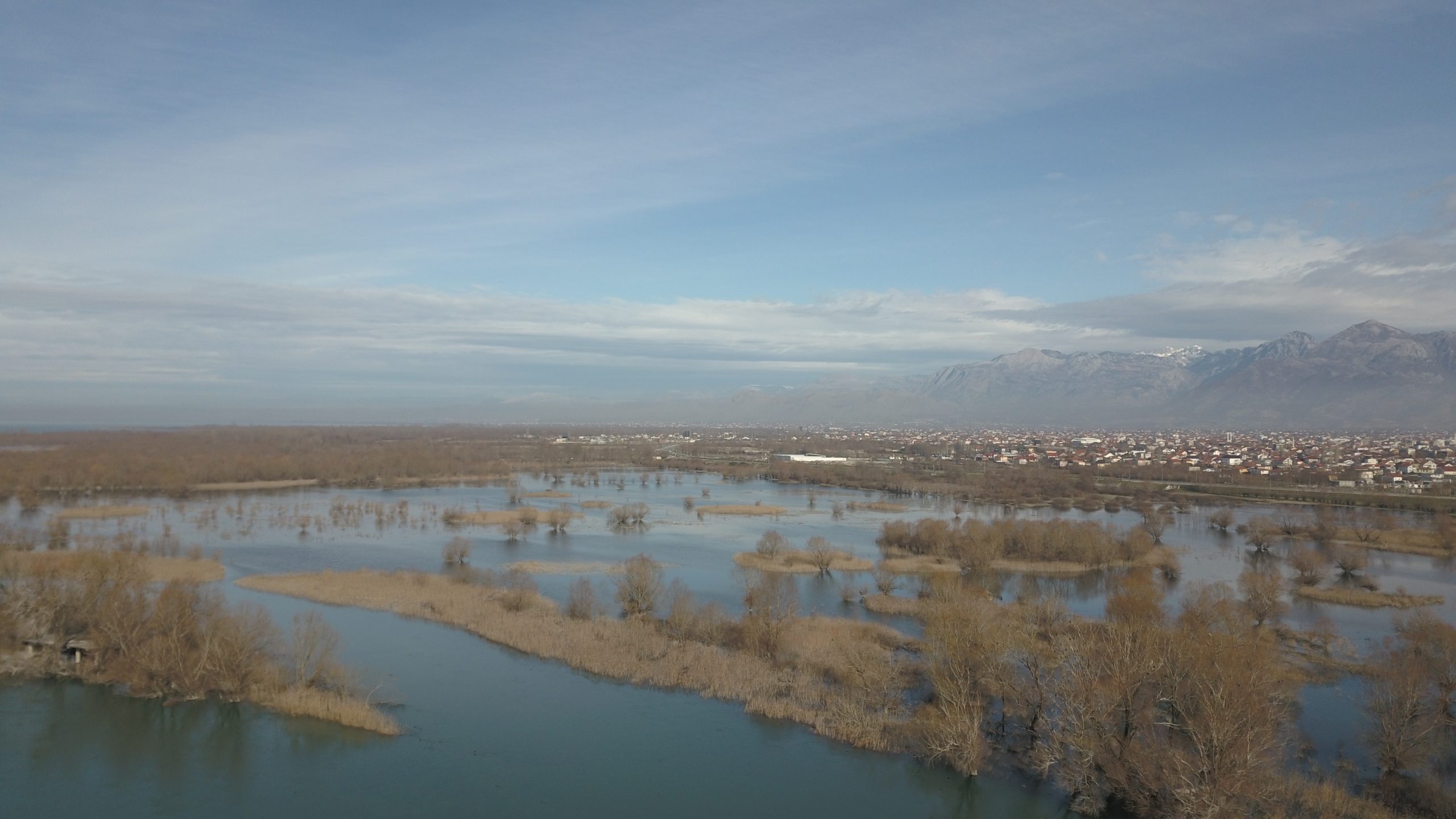
Skadar/Shkodra Lake, the Mediterranean’s largest freshwater body, is shared by Albania and Montenegro and faces several threats, among forest loss, wetland degradation, invasive species, pollution and disrupted connectivity. Despite strong evidence, restoration planning remains fragmented. Through this Planning Grant, PPNEA and CZIP will consolidate existing studies and data, consult authorities, communities and resource users, and produce one agreed, costed roadmap, with priorities, responsibilities and financing routes, for restoring lake-shore forests, wetlands, the Buna/Bojana corridor and estuary.
Skadar/Shkodra Lake is the Mediterranean’s largest freshwater body and a transboundary wetland of international importance, shared by Albania and Montenegro. Covering around 89,600 ha, it is recognized as Ramsar sites, KBA, IBA and as protected area nationally (with different IUCN statuses in AL and MNE). Together with the transboundary are of Buna River-Velipojë Protected Landscape, and has been nominated as a UNESCO Transboundary Biosphere Reserve. The landscape forms a vital ecological corridor linking the Albanian Alps, the lake, the Buna/Bojana River and the Adriatic coast, supporting a mosaic of habitats such as riparian forests, wet meadow mosaics and migratory fish such as eel. Its forests, wetlands and river connections also filter runoff, stabilise slopes and sustain local livelihoods.
Project objectives
– Consolidate the evidence through map and site assessments to produce a single baseline, gap analysis and map of priority areas.
– Engage stakeholders: Consult institutions, protected area bodies, municipalities, landowners, farmers, fishers and communities, and develop a governance analysis and engagement approach.
– Plan a draft forest restoration by taking in consideration sites priority sites, species, seed sources, phasing and maintenance for lake-shore riparian and floodplain forests.
– Assess wetland mosaic management: Examine wet meadow restoration, invasive species control, reed dynamics, mowing and the feasibility of water buffalo grazing, including one regional learning visit.
– Assess native vegetation recovery, erosion and fire-risk reduction, grazing pressure and quarry hotspots in Tarabosh mountain.
– Prepare a draft roadmap with a shared vision, theory of change, priority actions, costs, financing options and monitoring indicators, anchored in national and protected area planning.
Looking ahead
The prepared roadmap will be used by PPNEA and CZIP to further continue our work on raising funds and implement the concrete restoration actions. Work on lake-shore forests and wetland meadows should be ready to begin first, since sites will be prioritized, knowledge will be collected and verified, methods and costs will already be clear.
In each country, the work will be linked to protected area management plans and national plans for nature, land use and water. Albania and Montenegro’s EU accession process and the planned UNESCO Biosphere Reserve will help keep restoration on the agenda for the long term.
The partners will track progress, keep local people and institutions involved, and continue working across the border so that restoring the lake and its link to the sea remains a shared, lasting effort.
Project information
Project location: Albania and Montenegro
Lead partner: PPNEA
Grant duration: 2 years, 2026–2028
Grant value: USD 120,000
Countries: Albania and Montenegro