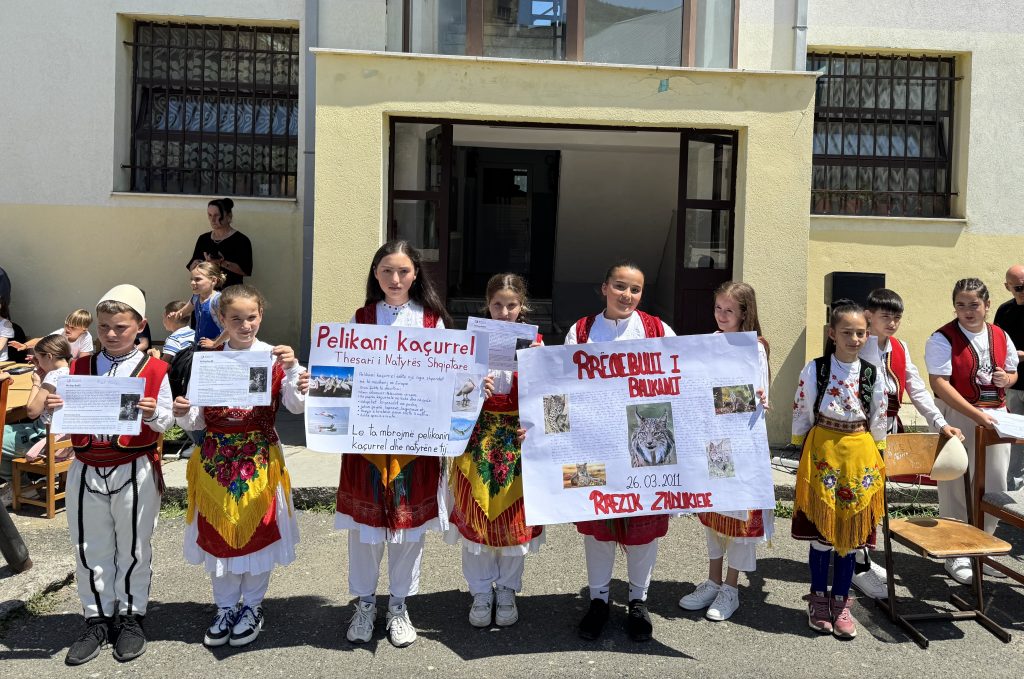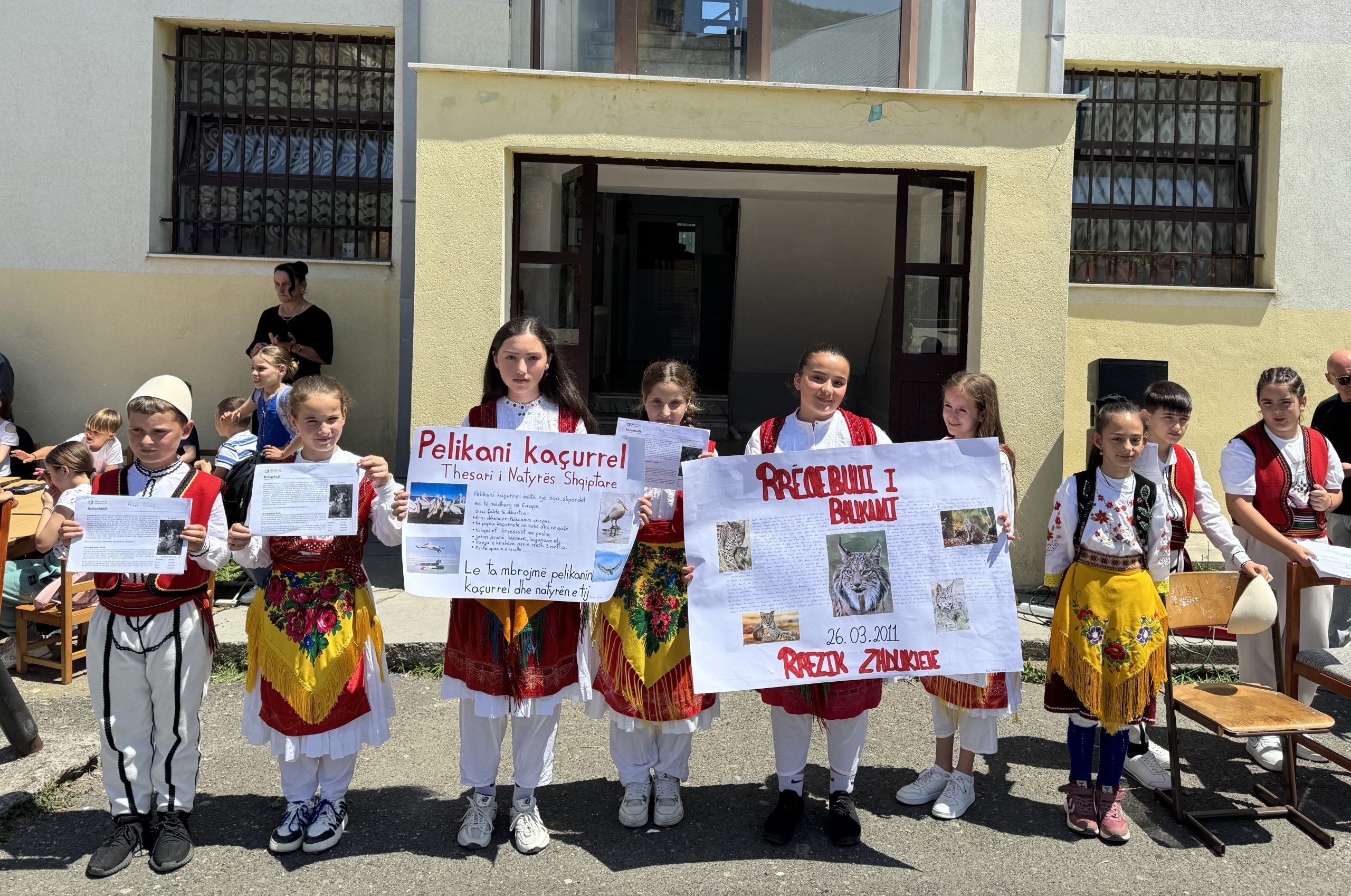

On the occasion of International Balkan Lynx Day, PPNEA and the Regional Administration of Protected Areas of Shkodër organized an educational activity with students from “Pjetër Arbnori” School in Fushë-Arrëz, one of the most important habitats of the Balkan lynx in Albania, located within the Munella region.
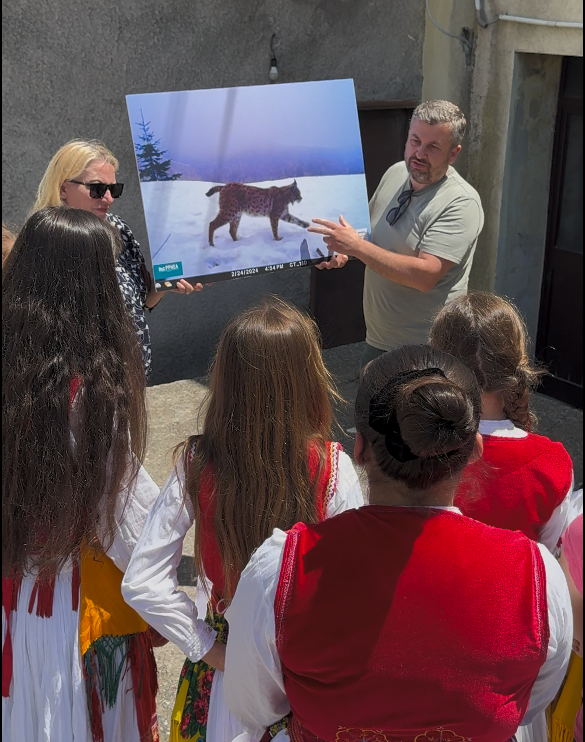
During the activity, children learned about Albania’s threatened wildlife species, the habitats surrounding their communities, and the importance of protecting them. Through camera-trap photographs, they discovered that the forests around them are home to the brown bear, roe deer, hare, chamois, wolf, and the Balkan lynx—one of the rarest wild cats in the world and among the most endangered mammals in Europe.
The students also learned how wildlife is monitored using camera traps, how to identify signs of the Balkan lynx in nature, and why the data collected through monitoring is essential for the conservation of this species.
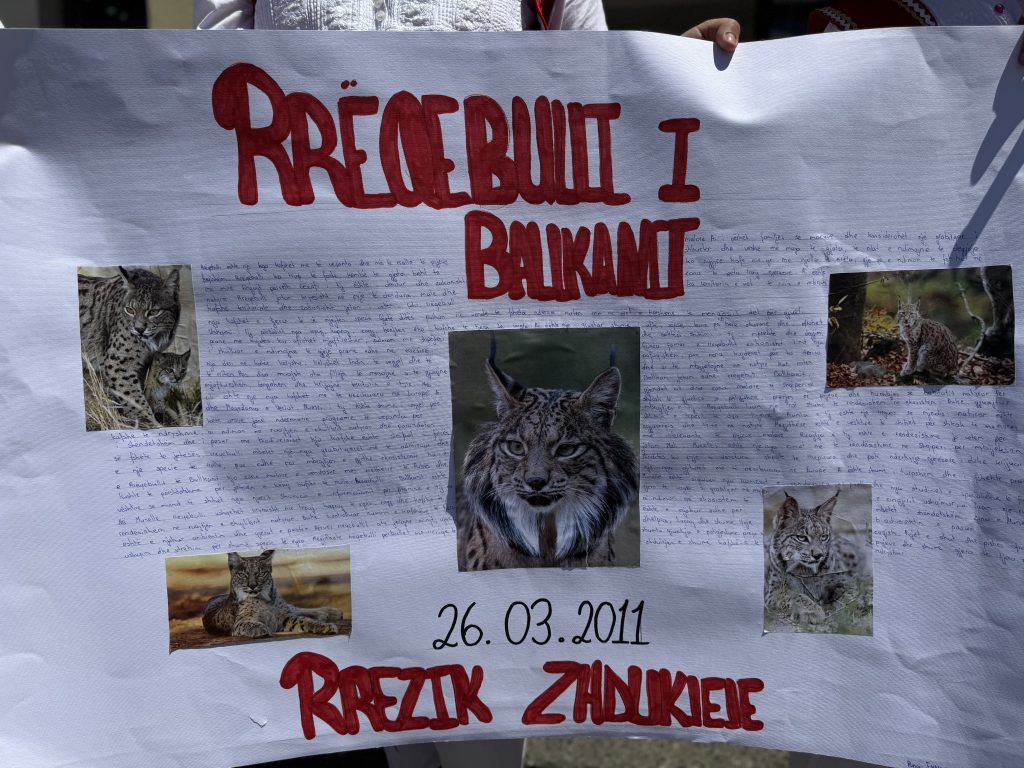
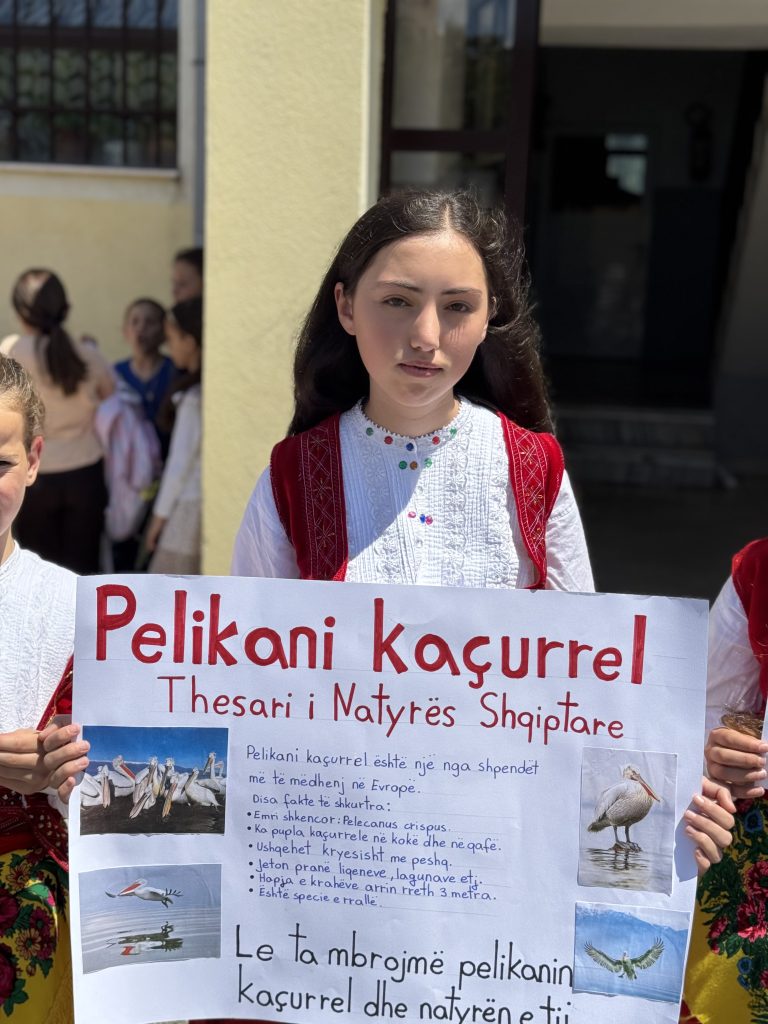
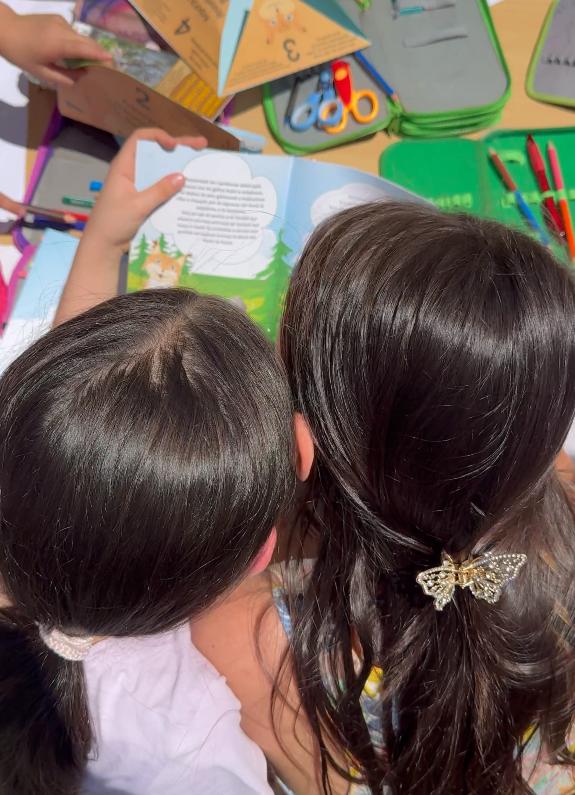
A special highlight of the event was the students’ own contribution. They prepared informative posters about the Balkan lynx and shared their knowledge with classmates, demonstrating both enthusiasm and commitment to nature conservation. The activity was further enriched by artistic performances, as children dressed in traditional costumes and performed local songs, celebrating both the natural and cultural heritage of their region.
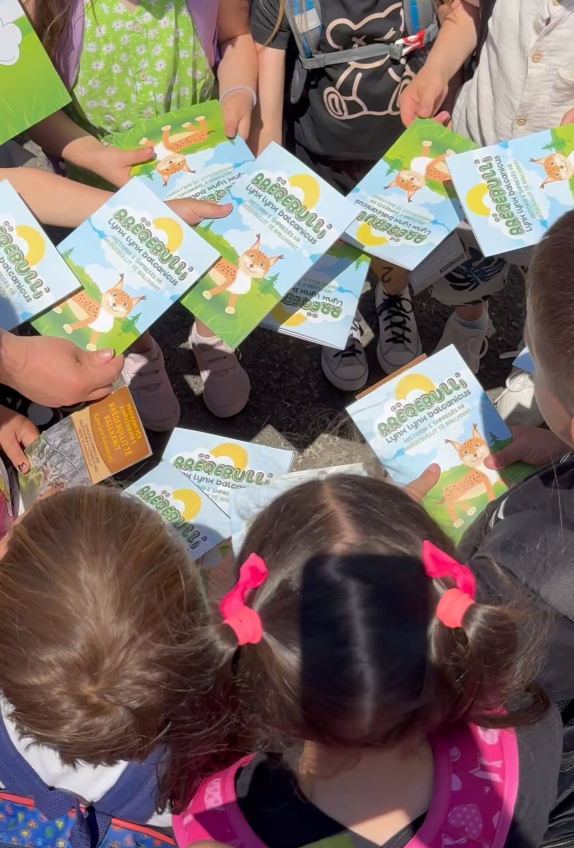
Each child received a copy of “The Lynx — A Story of Hope”, a book that tells a story of survival, hope, and the importance of protecting nature.
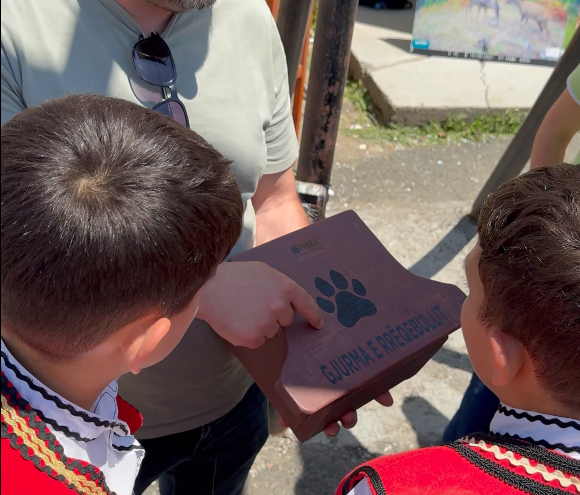
As part of the activity, “Pjetër Arbnori” School was also provided with a series of photographs of local mammals captured through camera-trap monitoring. These photographs will remain on display at the school, serving as a lasting educational tool and helping raise awareness about local biodiversity.
The students’ posters, the wildlife photographs, and the enthusiasm they brought to the event reminded us that conservation does not happen only in the field—it begins in the classroom as well. Every child who learns about nature today can become one of its protectors tomorrow.