PRESS RELEASE
A Sign of Life and Hope for the Balkan Lynx in Shebenik at a Critical Moment for the Population’s Future
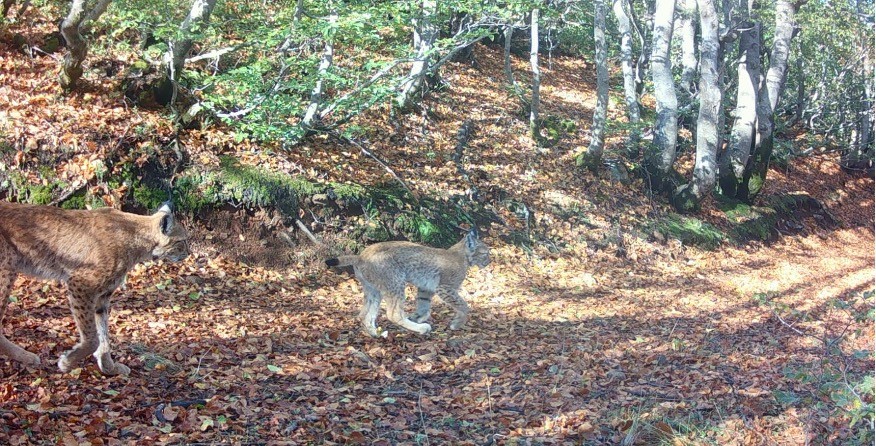
PPNEA’s camera traps have recorded an adult Balkan lynx alongside its cub in Shebenik National Park. This scientific evidence of reproduction comes at a decisive moment for the Critically Endangered population and ongoing genetic reinforcement efforts.
During the autumn, as part of national camera-trap monitoring, PPNEA, in cooperation with the Regional Administration of Protected Areas in Elbasan, recorded an adult Balkan lynx walking alongside its cub in Shebenik National Park. The footage provides important evidence of reproduction in the wild and valuable information for the conservation of this subspecies.
The record comes at a critical moment for the Balkan Lynx Recovery Programme (BLRP) as the programme is preparing for the next steps towards implementing the strategy for the
genetic reinforcement of the population. The Balkan lynx (Lynx lynx balcanicus) remains Critically Endangered, with a small, long-fragmented population facing threats that undermine its survival and reproduction.
Illegal killing, habitat loss and fragmentation, and low genetic diversity remain among the main threats. For such a small and isolated population, the loss of any individual or deterioration in ecological conditions can have disproportionate and lasting consequences.
The cub’s presence is an encouraging sign, but a single record is not enough to demonstrate population growth or recovery. This is precisely why scientific research and long-term monitoring matter: they help us understand the population’s status, identify critical habitats and threats, and develop conservation measures based on verifiable evidence. Scientific research must underpin decisions affecting protected areas.
Shebenik National Park is a vital habitat for the Balkan lynx. Its forests, prey populations and ecological corridors are essential for movement, feeding and reproduction. The documented presence of the cub provides further tangible evidence of the importance of protecting this ecosystem as a place where lynx can reproduce and raise the next generation.
In this context, protecting nature and protected areas is a shared responsibility, essential to protect the species that depend on them. Decisions affecting these ecosystems must be transparent, accountable with careful consideration of their long-term consequences. This cub is one concrete reason why that responsibility matters: protecting its habitat is directly linked to its chances of survival.
The protection of Shebenik in its entirety is essential, as the Balkan lynx requires undisturbed habitats, extensive territories, and functional ecological corridors to ensure its movement, long-term survival, and population viability. Any interventions that compromise the park’s ecological integrity, degrade critical habitats, or disrupt ecological connectivity must be prevented and actively addressed by the competent authorities.
For the Balkan lynx, habitat conservation is not a choice among alternatives. It is a condition for survival.