
PRESS RELEASE
Strengthening Regional Cooperation for Large Carnivore Conservation: Albania Hosts the International Large Carnivores Habitat Management Conference under the 4PETHABECO Project
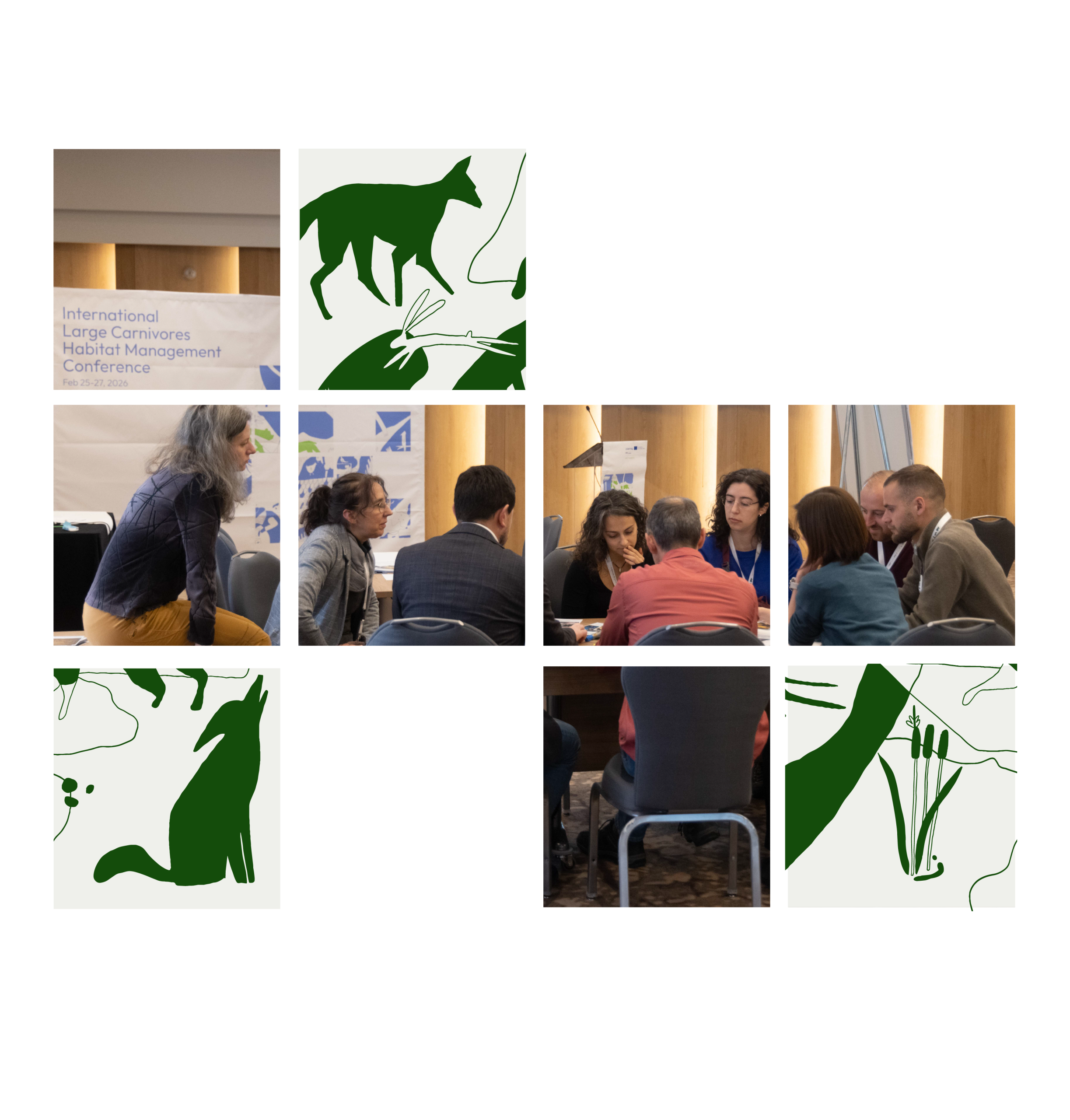
Tirana, Albania — Albania hosted the International Large Carnivores Habitat Management Conference for the first time, bringing together more than 90 researchers, practitioners, policymakers, and representatives of civil society organizations from across Europe. The conference was organized within the framework of the Interreg IPA ADRION Programme through the 4PETHABECO Project, serving as an important platform for advancing regional dialogue and cooperation on the conservation and sustainable management of large carnivore habitats.
The two-day conference convened experts from nearly 20 countries and leading institutions, including the International Union for Conservation of Nature, Prespa Ohrid Nature Trust, University of Udine, University of Tirana, and the Protection and Preservation of Natural Environment in Albania. Discussions highlighted the increasing momentum for cross-border collaboration in addressing the complex ecological and social challenges associated with large carnivore conservation.
The conference featured a series of high-level presentations focusing on innovative monitoring tools, governance frameworks, and landscape-scale approaches to maintaining ecological connectivity. Particular emphasis was placed on the strategic importance of Albania within major ecological corridors that sustain transboundary wildlife populations, including species such as the Balkan lynx, bears, wolves, and jackals.
Participants also engaged in three interactive parallel workshops addressing key dimensions of connectivity conservation in the Adriatic–Ionian region:
- Cultural dimensions of habitat suitability and connectivity for large carnivores
- Environmental variables for habitat suitability and connectivity, including practical VIF analysis in Google Earth Engine
- The role of protected areas in securing the future of large carnivore populations
These sessions explored both the technical and socio-cultural aspects of conservation, emphasizing that successful habitat management requires not only robust scientific knowledge but also inclusive governance, spatial planning, and community engagement. A strong focus was placed on the human dimension of conservation, examining how cultural values and social perceptions influence coexistence between people and large carnivores.
Participants also took part in a field visit to Shebenik National Park, one of Albania’s most intact protected areas. The study visit provided a practical perspective on large carnivore habitat management and conservation challenges on the ground. The visit created a direct link between policy discussions and field-based conservation practices, highlighting the daily efforts required to protect biodiversity while supporting local livelihoods.
A key highlight of the visit was a live demonstration of an electric fence installation for beehives, an effective mitigation measure designed to prevent bear damage and reduce human–wildlife conflict. The activity illustrated practical solutions that support coexistence between communities and wildlife while safeguarding traditional rural livelihoods. Set within the landscapes of Shebenik, the field visit underscored the importance of applied conservation, cross-border knowledge exchange, and collaboration between institutions, researchers, and local stakeholders.
By bringing together diverse expertise and perspectives, the conference reaffirmed the importance of regional partnerships and evidence-based strategies in conserving large carnivore populations and the ecological corridors upon which they depend. The event also highlighted the role of collaborative initiatives such as the 4PETHABECO Project in strengthening transnational cooperation and promoting sustainable coexistence between people and wildlife across the Adriatic–Ionian region.
About 4PETHABECO:
The 4PETHABECO Project is supported by the Interreg IPA ADRION Programme under the Interreg Funds (European Regional Development Fund and IPA), and seeks to improve transboundary cooperation in large carnivore habitat management across the Adriatic–Ionian region.