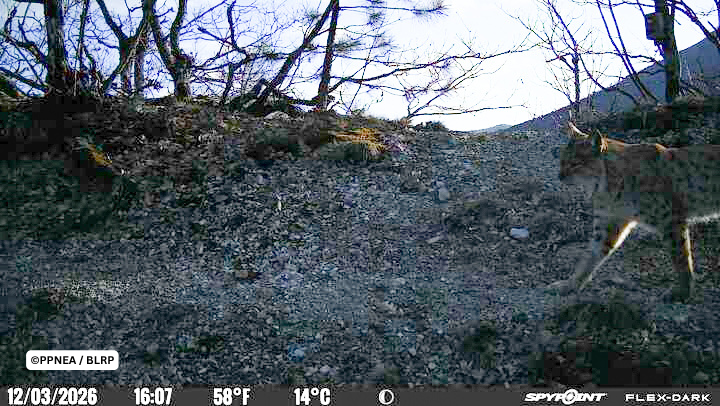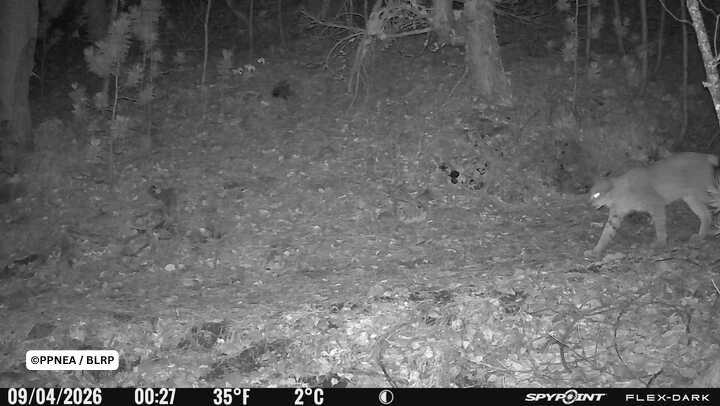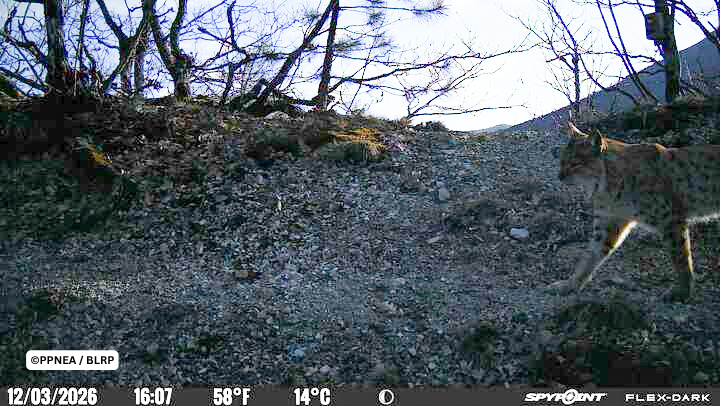

During 2025, through the systematic analysis and comparison of images collected from camera traps deployed by PPNEA, two distinct individuals of the Balkan lynx were successfully identified in Shebenik National Park. This represents a significant finding, as it clearly indicates that the area is not only used by transient individuals potentially dispersing from North Macedonia (Mavrovo National Park), but also supports resident individuals that inhabit the park on a long-term basis.
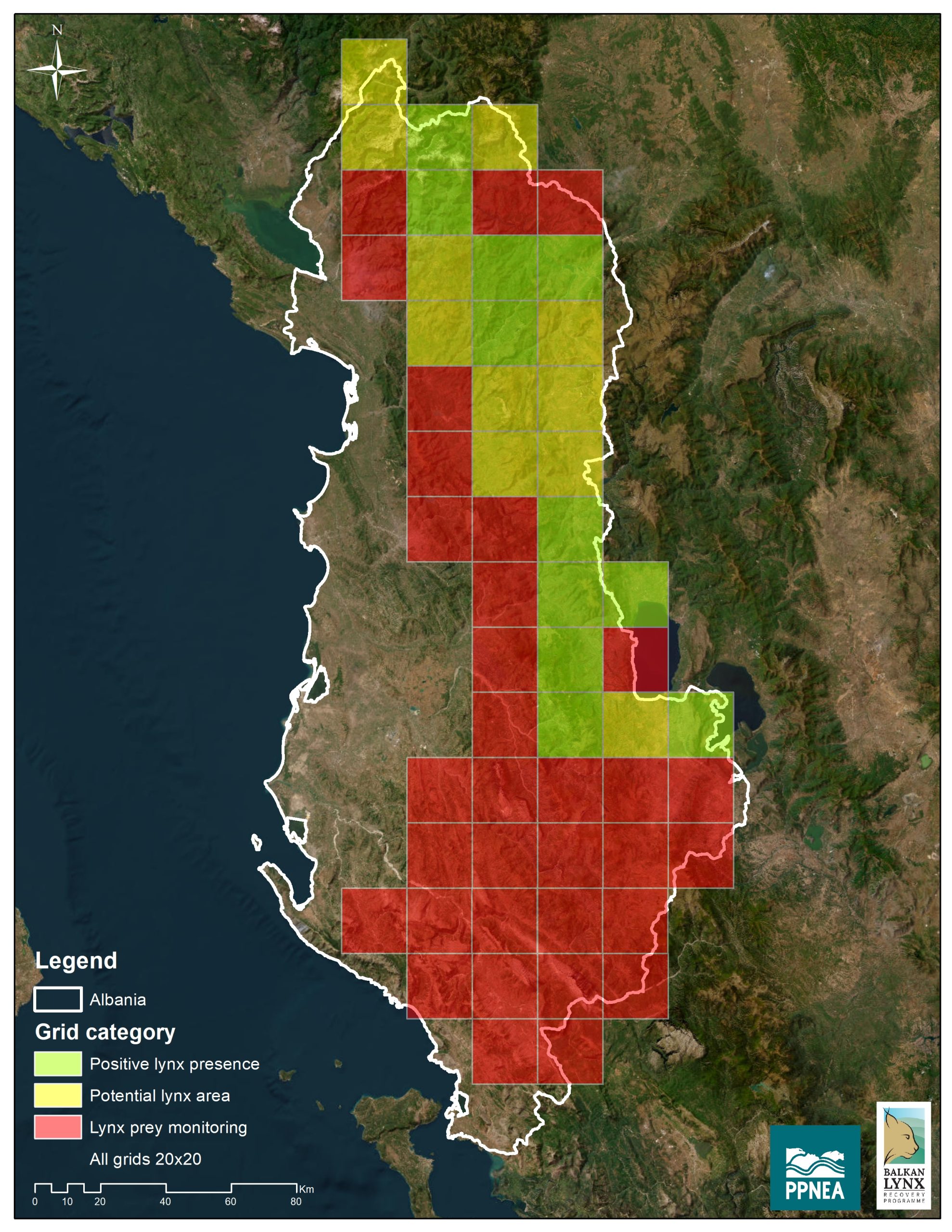
As part of this initiative, PPNEA is implementing a nationwide monitoring program for the Balkan lynx in Albania, in close collaboration with the Regional Administration of Protected Areas (RAPAs) in regions where the species is present or potentially present. The study follows a standardized scientific methodology using camera traps and encompasses some of the country’s most important habitats, which also form key sites of ecological corridors. Priority areas include the Albanian Alps National Park, Munella Nature Park, Korab–Koritnik Nature Park, Lurë–Dejë National Park, Bizë–Martanesh, Shebenik, and Polis–Valamarë.
The study area has been divided into 20×20 km grids, with cameras strategically positioned based on terrain characteristics, wildlife signs, and the potential presence of lynx and its prey. Cameras are regularly checked, and the collected data are analyzed to assess distribution, movement patterns, and population dynamics. Initial results are encouraging, confirming lynx presence in both Munella and the Korab–Koritnik area.
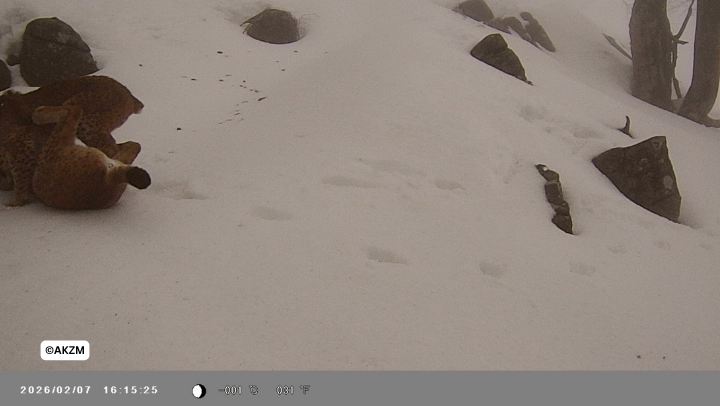
A further important update came in February of this year from staff at the Regional Administration of Protected Areas in Elbasan, who captured two lynx individuals in the same photograph in the southwestern part of the park. This provides strong scientific evidence for the existence of a small resident population in the area, underscoring the park’s critical role in the survival of this critically endangered species.
The monitoring program is expected to continue for approximately one year. In the coming weeks, efforts will focus on installing additional cameras in other mountainous areas, while PPNEA experts continue to expand and strengthen the Balkan lynx monitoring network throughout Albania.