
LIFE DinPin Bear: An ambitious project for the conservation of the brown bear in the Dinaric–Pindos range
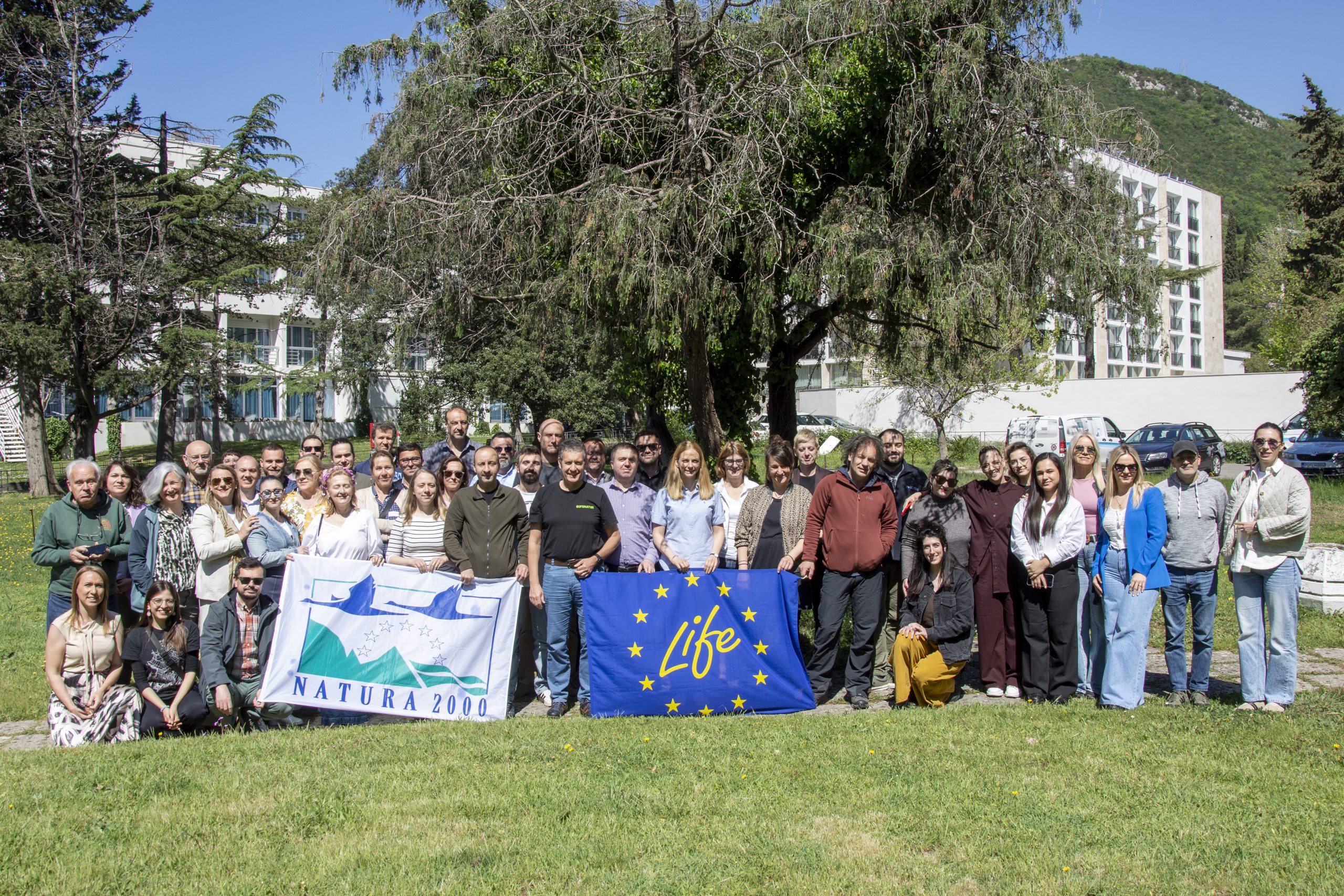
A new European project, LIFE DinPin Bear, was launched in January 2026 across nine countries located along the Dinaric Alps–Pindos range, aiming to implement a comprehensive conservation strategy for the brown bear at the population level in this region. On April 22–23, 2026, the kick-off meeting was held in the city of Budva, Montenegro, with the participation of approximately 50 representatives from the project’s 21 partner organizations.
During the two-day meeting, which was hosted by the Center for the Study and Protection of Birds of Montenegro (CZIP), participants had the opportunity to get to know each other better and to discuss the objectives and activities to be carried during LIFE DinPin Bear.
TheDinaric–Pindos brown bear (Ursus arctos) population is distributed across the nine project countries: Albania, North Macedonia, Bosnia and Herzegovina (Federation of Bosnia and Herzegovina/Republika Srpska), Greece, Kosovo, Croatia, Montenegro, Serbia, and Slovenia. With approximately 4.000 individuals, this is the bear population in Europe with the largest number of countries in its range, which makes its management very challenging but also crucial.
The three European Union member states (Croatia, Slovenia, and Greece) have previously implemented effective management practices that contributed to the recovery of bear populations. However, the long-term viability of these populations is now being questioned, as human–bear conflicts remain a highly controversial issue and the species’ habitats continue to be threatened.
The status of the brown bear in non-EU countries is less well understood. Nevertheless, there is a lack of comprehensive Management Plans for the species in these countries or, where such plans exist, they are not effectively implemented. These issues are further exacerbated by the absence of coordinated population-level and transboundary management.
The LIFE DinPin Bear project focuses on creating the legal, management, and socio-economic conditions necessary to ensure the conservation of the brown bear population in the Dinaric Alps–Pindos range.
The main pillars of the project are:
-
Investigating and reducing habitat fragmentation and the decline/loss of bear populations
-
Effectively managing human–bear conflicts and providing tools to support coexistence with local communities
-
Strengthening the legal and procedural framework for monitoring and managing bear populations
-
Enhancing and harmonizing transnational cooperation in management
-
Securing the support of key stakeholder groups to ensure the long-term conservation of the species
Each country/political entity will participate in the project through representation by one governmental and one non-governmental organization.
“The implementation of this project defines a landmark for brown bear conservation in Europe”, says Gabriel Schwaderer, Director of EuroNatur, coordinating organization of LIFE DinPin Bear. “It is a very ambitious initiative with activities that will cover the whole range of the Dianric-Pindos bear population, which creates a unique opportunity to advance management and protection measures for the species. While we are aware of the challenges of such a huge project, we are also very proud to be uniting both governmental and non-governmental organizations from EU member states and EU candidate countries with a common goal. The engagement of local partners, stakeholders and communities is crucial for the success of this project”, adds Gabriel Schwaderer.
“We expect our project to have a great positive impact on the Dinaric-Pindos bear population”, adds Antje Henkelmann, coordinator of the project at EuroNatur. “Brown bears have been historically persecuted, but they actually avoid humans and play a key role in their ecosystem. Being the largest omnivores in the continent, they regulate biodiversity, habitat structure and nutrient cycles. We are honored and excited to implement the project with so many experienced team members. This is the start of something big!”, Antje Henkelmann points out.
Project partners:
EuroNatur – Germany, DivjaLabs – Slovenia, Slovenian Forest Service (SFS) – Slovenia, University of Zagreb – Croatia, Ministry of Agriculture – Croatia, Center for Environment (CZZS) – Republika Srpska, Republic Institute for the Protection of Cultural, Historical and Natural Heritage – Republika Srpska, Regional Environmental Center (REC) – Federation of Bosnia and Herzegovina, Federal Ministry of Environment and Tourism – Federation of Bosnia and Herzegovina, Institute of Nature Conservation of Serbia (INCS) – Serbia, University of Belgrad – Serbia, Center for the Study and Protection of Birds of Montenegro (CZIP) – Montenegro, Environmental Protection Agency (EPA) – Montenegro, Environmentally Responsible Action Group (EPA) – Kosovo, Ministry of Environment, Spatial Planning and Infrastructure – Kosovo, Protection and Preservation of Natural Environment in Albania (PPNEA) – Albania, National Agency for Protected Areas (NAPA) – Albania, Macedonian Ecological Society (MES) – North Macedonia, Ministry of Environment and Physical Planning – North Macedonia, Callisto NGO – Greece, Natural Environment and Climate Change Agency (NECCA) – Greece.
\
The LIFE DinPin Bear project (LIFE24-NAT-DE-LIFE DinPin Bear/101214048) aims to implement a comprehensive conservation strategy for the brown bear at the population level across the Dinaric Alps–Pindos range.
The project is implemented in nine countries, three of which are members of the European Union: Albania, North Macedonia, Bosnia and Herzegovina (Federation of Bosnia and Herzegovina / Republika Srpska), Greece, Kosovo, Croatia, Montenegro, Serbia, and Slovenia.
LIFE DinPin Bear brings together a multidisciplinary partnership of 20 organisations, including universities and research institutions, national and local authorities, and environmental NGOs.
The project started in January 2026 and will run until June 2031. The total project budget amounts to €9,426,977.15 and is co-funded by the European Union under the LIFE Programme (75%), with the remaining 25% covered by the partners’ own resources.